Yesterday's Born There answers
Flight 010, 27 November 2026. Yesterday's flight is still free to play, so try it first if you haven't. Each answer stays hidden until you tap it. Today's answers go up here tomorrow.
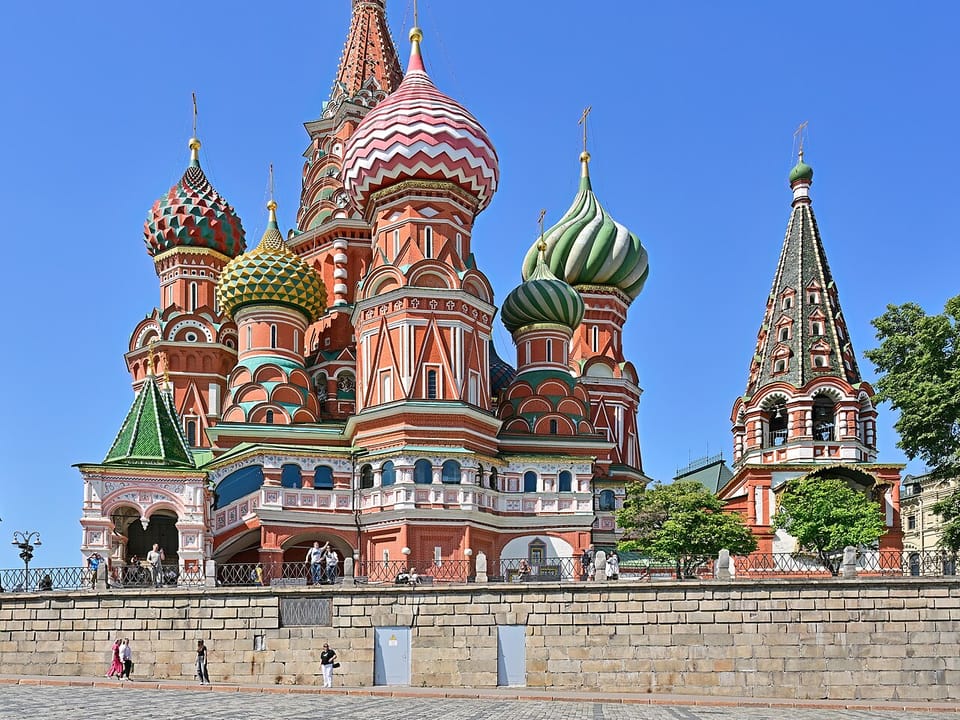
Stop 1: Where is this church with its cluster of patterned onion domes?
Show the answer
Moscow, Russia. What is this church called? Saint Basil's Cathedral (Cathedral of Vasily the Blessed).
What gave it away: The swirling, zigzag and diamond-patterned onion domes topped with gold Orthodox crosses, set on red-brick towers with white trim, are classic Russian church design, and the tented green bell tower and cobbled square in front point to Moscow's Red Square.
Ivan the Terrible had the cathedral built between 1555 and 1561 to celebrate the capture of Kazan and Astrakhan. Legend says he blinded its architect so it could never be copied, but historians think this is a myth, because the architect went on to work on the walls and towers of the Kazan Kremlin.
Photo: Saint Basil's Cathedral, Moscow - General view1 by Юрий Д.К., CC BY 4.0.

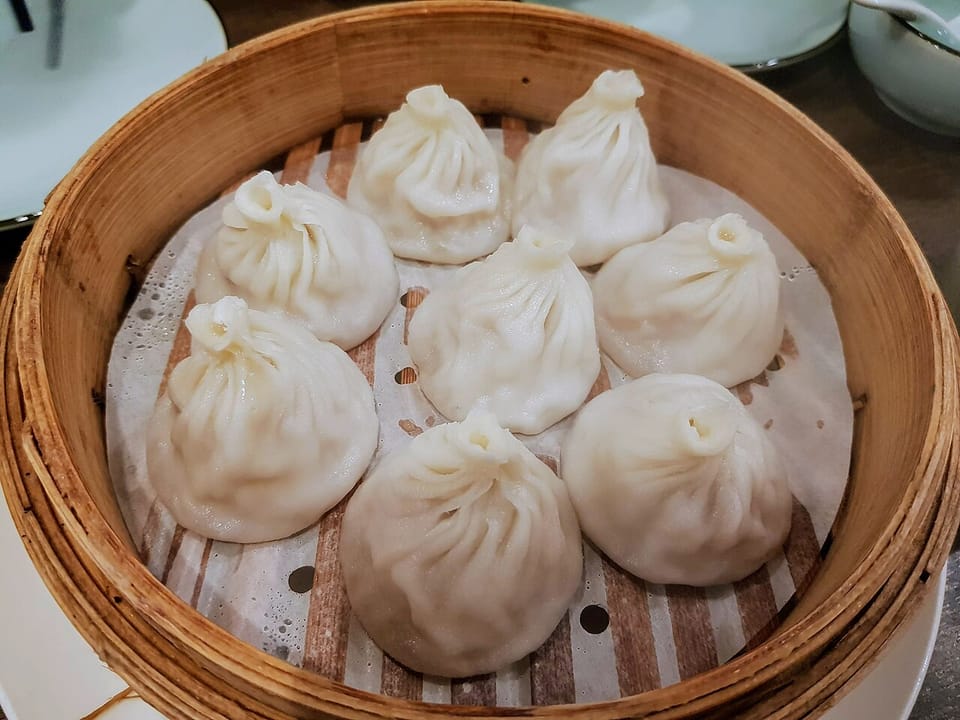
Stop 2: Where do these dumplings come from?
Show the answer
Shanghai, China. What are these dumplings called? Xiaolongbao.
What gave it away: The round bamboo steamer lined with perforated paper and the thin, almost translucent wrappers pinched into a fine spiral of pleats with a little knot on top are the giveaways. Notice too how each bun slumps wide at the base, heavy with what's sealed inside.
Shanghai's xiaolongbao began in Nanxiang, once a neighbouring village and now an outer suburb of the city. The soup inside starts as solid meat jelly wrapped in with the filling, which melts into broth as the buns steam.
Photo: 2019-02-22 Xiaolongbao in "Taste Of Shanghai" restaurant, Sydney, Australia by Maksym Kozlenko, CC BY-SA 4.0.

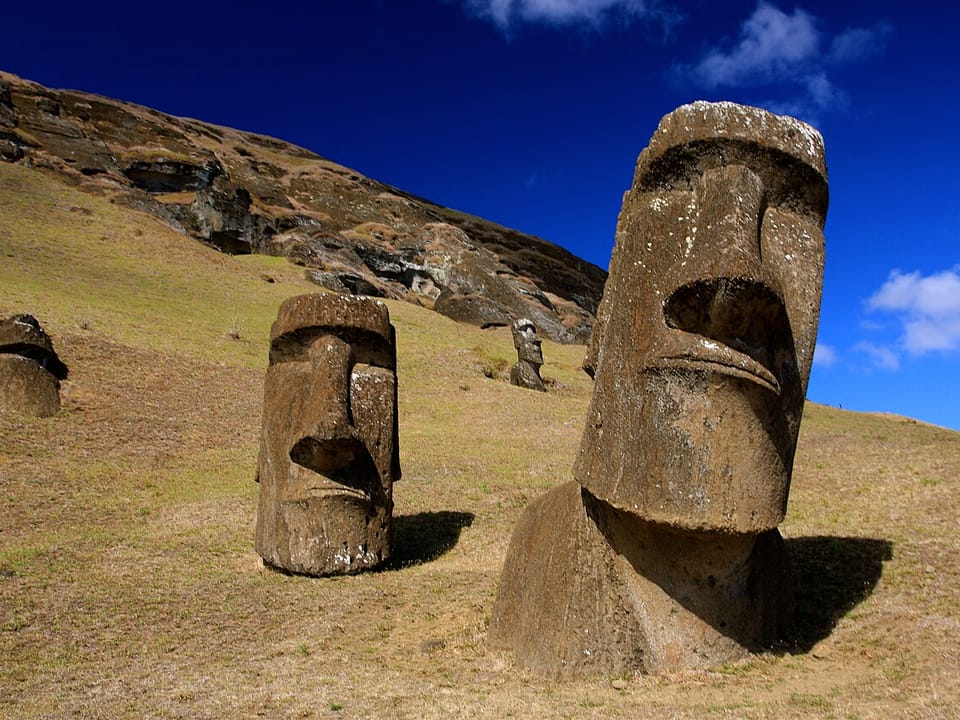
Stop 3: Where are these statues?
Show the answer
Hanga Roa, Chile. What are these statues called? Moai.
What gave it away: The long, heavy-browed stone faces with jutting noses and thin, pursed lips are unmistakable, and the bare grassy slope under a rugged rock face and a deep blue sky only adds to the picture.
Moai are often called 'Easter Island heads' because many photographed statues on the slopes of Rano Raraku are buried to their shoulders. In fact they are whole-body figures, and some of those buried bodies have been dug out to reveal carved markings protected from erosion.
Photo: Moai at Rano Raraku - Easter Island (5956405378) by TravelingOtter, CC BY 2.0.

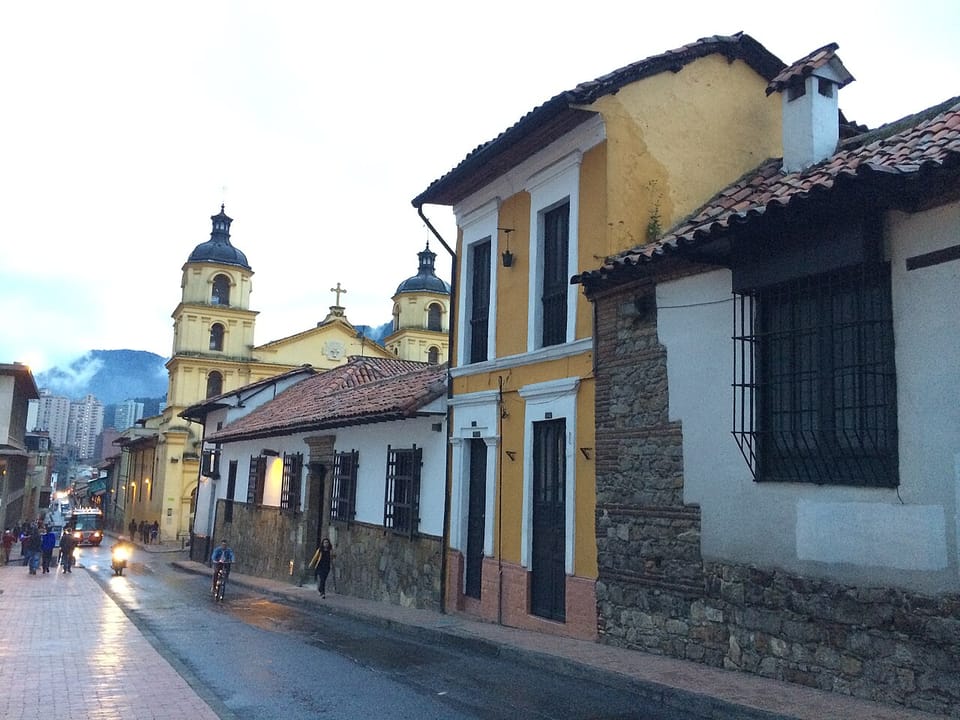
Stop 4: Where is this old quarter?
Show the answer
Bogotá, Colombia. What is this historic district called? La Candelaria.
What gave it away: Low Spanish colonial houses with clay-tile roofs, rough stone footings and iron window grilles line a rain-slicked street towards a yellow church with twin domed towers. Behind it, misty green mountains rise right over a cluster of modern high-rises under a cool, overcast sky, the look of a capital set high in the Andes.
La Candelaria is believed to be where Bogotá was founded, on 6 August 1538. The district takes its name from the colonial Church of Nuestra Señora de la Candelaria.
Photo: La Candelaria, Bogotá, Colombia - panoramio (30) by Jimmy Gómez N, CC BY-SA 3.0.

Stop 5: A friend who lives there sends you this. Where are you meeting?
سلام! نتلاقاو مع الثمنية فجامع الفنا، حدا مول عصير الليمون؟Show the answer
Marrakesh, Morocco. What is the square called? Jemaa el-Fnaa.
What gave it away: The +212 country code is Morocco's, and the Darija gives it away: the verb ending in 'nt-laqaw', 'f' squeezed onto 'Jamaa', 'hda' for 'next to' and 'moul' for the man who runs the stall, with 'limoun' meaning orange rather than lemon. Naming Jamaa el-Fna by name pins it to Marrakesh.
"Hi! Shall we meet at eight at Jemaa el-Fnaa, by the orange-juice man?" By day Marrakesh's main square is lined with orange-juice stalls, and as darkness falls it fills with dozens of food stalls. UNESCO proclaimed it Intangible Cultural Heritage in 2001.